 Pin It
 My grandmother's kitchen smelled like this cake every time we visited her in the summers—rich cocoa mixing with something sweeter, almost tropical. She never wrote down her recipe, just worked from memory with that knowing smile that said she'd made it a thousand times. Years later, when I finally cracked the code and made my first German chocolate cake from scratch, I understood why she guarded that recipe so carefully. It wasn't just the layers of chocolate or that incredible frosting; it was the whole experience of watching it come together, knowing something special was about to happen.
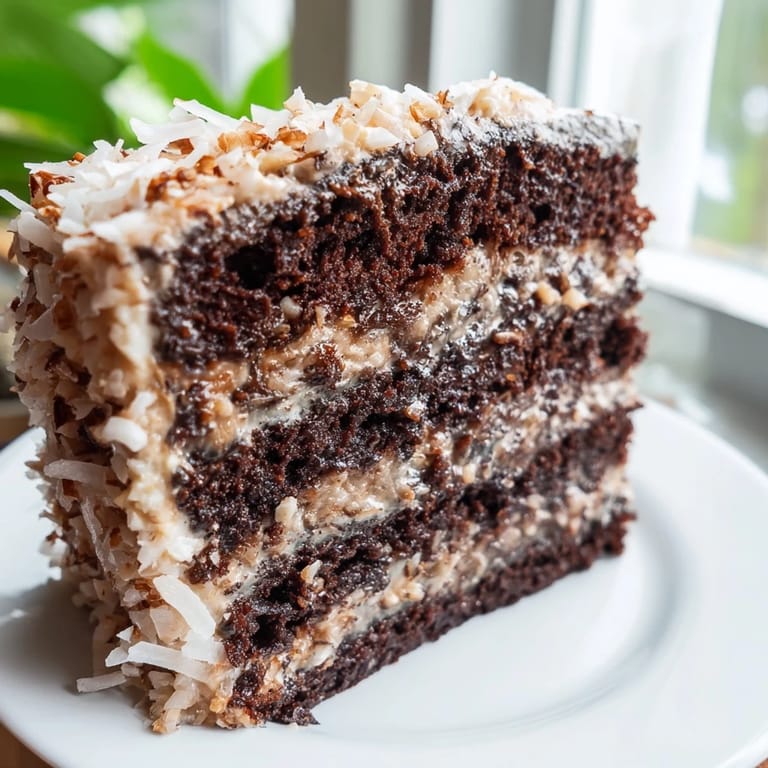
I made this for my neighbor's birthday potluck one Saturday afternoon, and I remember being nervous about transporting three layers in my old car. When I arrived and set it down on the table, people literally stopped mid-conversation and just stared at it. Watching someone's face light up when they took that first bite—coconut, pecans, chocolate all in one bite—made every minute of prep time worth it.
Ingredients
- All-purpose flour: This is your structure; don't skip sifting it with the cocoa powder to break up any lumps.
- Unsweetened cocoa powder: The real deal matters here—Dutch-process gives deeper flavor, but standard cocoa powder works beautifully too.
- Baking soda and baking powder: They work together to give you that tender, almost cloud-like crumb that makes this cake so special.
- Boiling water: This seems odd, but trust it—it hydrates the cocoa fully and creates moisture that keeps the cake tender for days.
- Eggs and milk at room temperature: Cold ingredients don't incorporate smoothly, so pull them out of the fridge about an hour before you start.
- Evaporated milk for the frosting: Don't substitute regular milk; the concentrated richness is what makes this frosting taste like nothing else.
- Coconut and pecans: Toast them lightly in a dry pan for just two minutes before adding to the frosting if you want the nutty flavor to really sing.
Tired of Takeout? 🥡
Get 10 meals you can make faster than delivery arrives. Seriously.
One email. No spam. Unsubscribe anytime.
Instructions
- Prep your pans and heat your oven:
- Set the oven to 350°F and give those three cake pans a good greasing and light flouring. This is the moment to make sure you have three pans—don't try to bake them in batches because the batter sets quickly.
- Mix your dry ingredients:
- Whisk together the flour, sugar, cocoa powder, baking powder, baking soda, and salt in a large bowl. Take your time here; you want everything evenly distributed so there are no pockets of baking soda hiding in the batter.
- Add the wet ingredients:
- Crack those room-temperature eggs right in, add your milk, oil, and vanilla, then beat on medium speed for exactly two minutes. The mixture will look thick and smooth, almost mousse-like.
- Stir in the boiling water carefully:
- This is where people hesitate, but pour that boiling water right in and stir gently—the batter will become thin and almost pourable, which is exactly what you want. It feels wrong, but it's absolutely right.
- Divide and bake:
- Pour the batter evenly among your three pans and slide them into the oven. You'll smell chocolate starting to deepen within about fifteen minutes. Bake until a toothpick inserted in the center comes out clean, around 30 to 35 minutes.
- Cool with patience:
- Let the cakes rest in their pans for ten minutes—this lets them set enough to handle—then turn them out onto wire racks to cool completely. This step is crucial; trying to frost a warm cake is a recipe for sliding frosting.
- Make the frosting magic:
- In a medium saucepan, whisk together the evaporated milk, sugar, egg yolks, and butter over medium heat, stirring constantly. Watch it carefully; after about twelve minutes, it'll go from thin to noticeably thicker and slightly caramelized-looking.
- Season and cool the frosting:
- Remove from heat and stir in vanilla, then fold in the coconut and pecans while it's still warm so they absorb a bit of the richness. Let it cool for about thirty minutes until it's spreadable but still soft.
- Stack and frost:
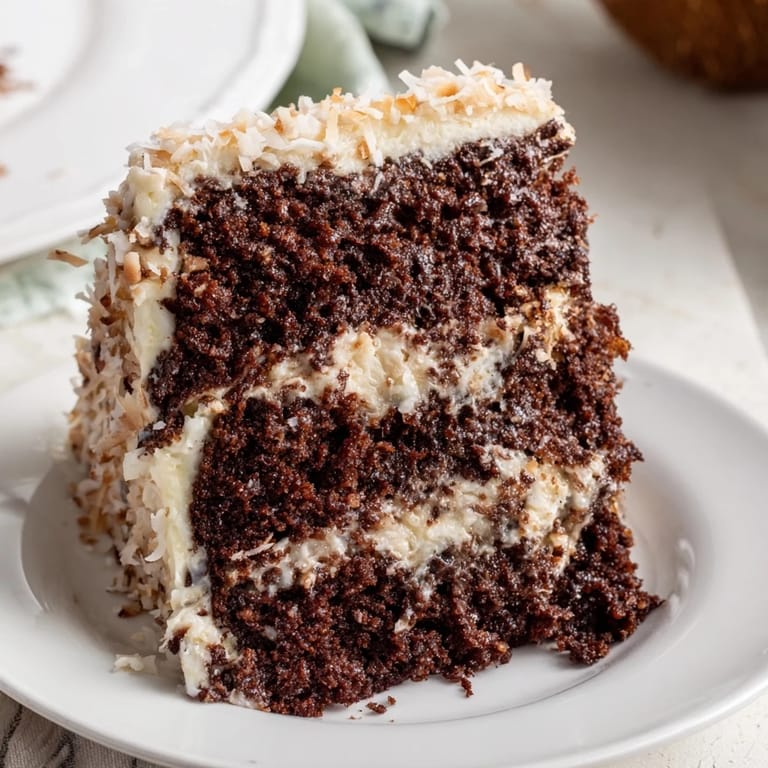
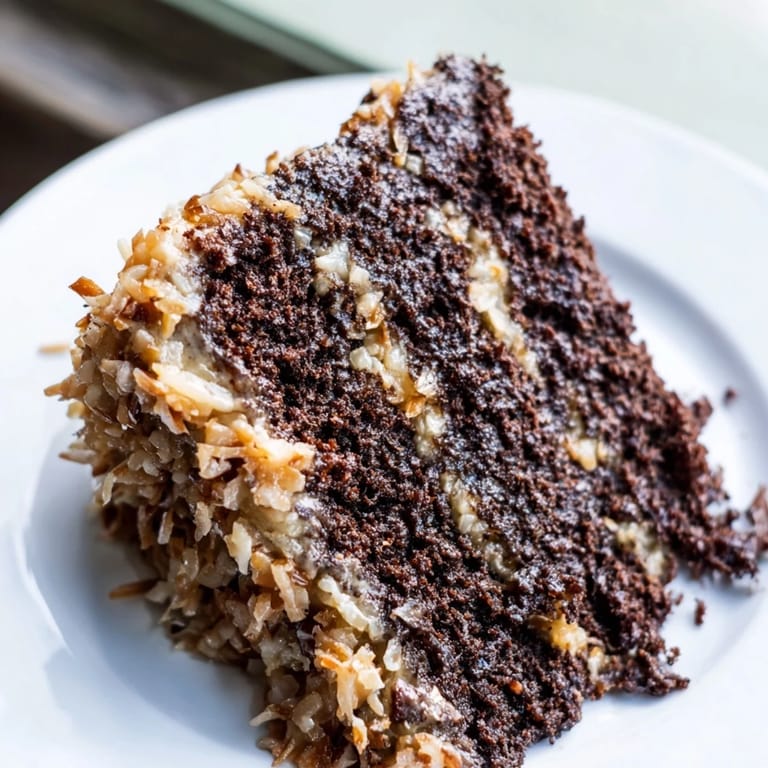
- Place your first cake layer on a serving plate and spread a generous layer of frosting on top. Repeat with the second layer, then crown it all with the final layer and remaining frosting on top, and sides if you're feeling fancy.
 Pin It
 The moment I frosted my first layer and saw that warm, pecan-studded frosting melting slightly into the chocolate cake, I realized why my grandmother had made this cake so often. It's not just a dessert; it's a small miracle of patience and technique creating something that tastes like comfort and celebration at the same time.
Why This Cake Stands Apart
German chocolate cake has this reputation as old-fashioned or retro, but once you make it, you understand it's absolutely timeless. The combination of a moist, tender chocolate cake with that cooked frosting—the one with actual body that doesn't taste like pure sugar—creates a balance that modern recipes often miss. Most chocolate cakes have frosting slapped on top; this one feels designed where every element exists to complement the others.
Storage and Keeping
This cake actually improves after a day or two because the flavors have time to meld and the frosting firms up into a more unified layer. I've kept it covered at room temperature and it stayed fresh for two full days. If you want it to last longer, wrap it well and refrigerate—just pull it out an hour before serving so the frosting softens back to that perfect texture and the chocolate cake isn't cold and dense.
Variations and Personal Touches
Once you nail the basic recipe, you can play with it in small ways that still respect what makes it special. Some people add a tablespoon of espresso powder to the cocoa to deepen the chocolate flavor, or use dark rum instead of vanilla in the frosting for an adult edge. The notes suggested chocolate drizzle on top, which I've done and loved, but I've also seen it with a light dusting of toasted coconut on the sides for extra texture.
- If you want less sweetness in the frosting, substitute half the sugar with light brown sugar for a more nuanced flavor.
- Make sure you're using sweetened shredded coconut unless you specifically prefer less sugar—unsweetened coconut will need sweetening on its own.
- Don't skip cooling the frosting before you spread it, even though it's tempting when you smell that vanilla and see those pecans.
 Pin It
 Making a German chocolate cake from scratch is one of those baking projects that feels more difficult than it actually is, and the payoff is enormous. Once you've made it once, you'll understand why my grandmother smiled that knowing smile—it's the kind of cake that makes people feel loved.
Recipe FAQs
- → What makes this chocolate cake moist?
Boiling water added to the batter helps dissolve the cocoa and creates a tender, moist crumb in the chocolate cake layers.
- → How is the coconut-pecan frosting prepared?
The frosting is cooked by whisking evaporated milk, sugar, egg yolks, and butter until thickened, then folding in vanilla, shredded coconut, and chopped pecans after cooling.
- → Can I use unsweetened coconut in the frosting?
Yes, substituting with unsweetened shredded coconut provides a less sweet frosting while maintaining its signature texture.
- → How should the layers be assembled?
Each cooled cake layer is spread evenly with one-third of the frosting before stacking, finishing with frosting on the top and optionally the sides.
- → What tools are essential for baking this cake?
Key tools include three 9-inch round cake pans, mixing bowls, an electric mixer, a saucepan for the frosting, a whisk, spatula, and wire racks for cooling.
- → How long can the cake be stored fresh?
Keep covered at room temperature up to two days or refrigerate for longer freshness while maintaining texture and flavor.