 Pin It
 My first bowl of miso soup came on a gray Tuesday morning in a small Tokyo train station, and I still remember how the steam rose up and warmed my face before I even tasted it. There's something almost meditative about watching the ribbons of miso dissolve into hot broth, how the silken tofu doesn't fight back but simply becomes part of something larger. Years later, I've learned that this humble soup is far more than comfort in a bowl—it's a quiet lesson in simplicity, where just a handful of ingredients speak volumes.
I made this for my neighbor one winter when she was recovering from being under the weather, and watching her face soften as she sipped it reminded me why I cook at all. She asked for the recipe three times, not because it was complicated, but because something so simple had made her feel genuinely cared for. That's the magic of miso soup—it's not flashy, but it arrives like a warm hug you didn't know you needed.
Ingredients
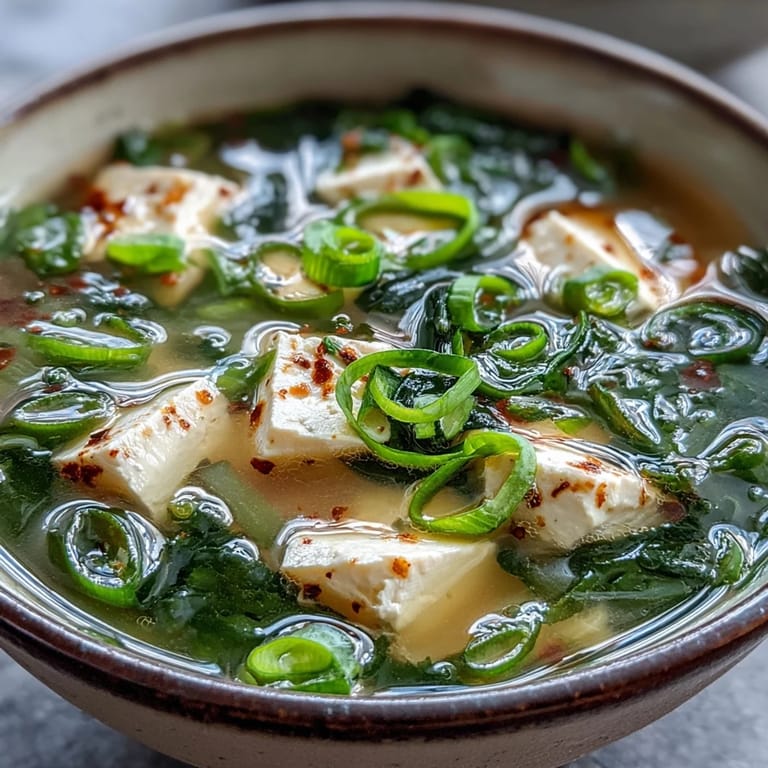
- Dashi stock (4 cups): This is your foundation, the reason the soup tastes like depth rather than just saltiness—use vegetarian kombu and shiitake if you're avoiding fish, and don't skip the quality here because there's nowhere to hide.
- White or yellow miso paste (3 tablespoons): The soul of the dish, packed with umami and those beneficial probiotics, so handle it gently and never let it boil once it's in the pot.
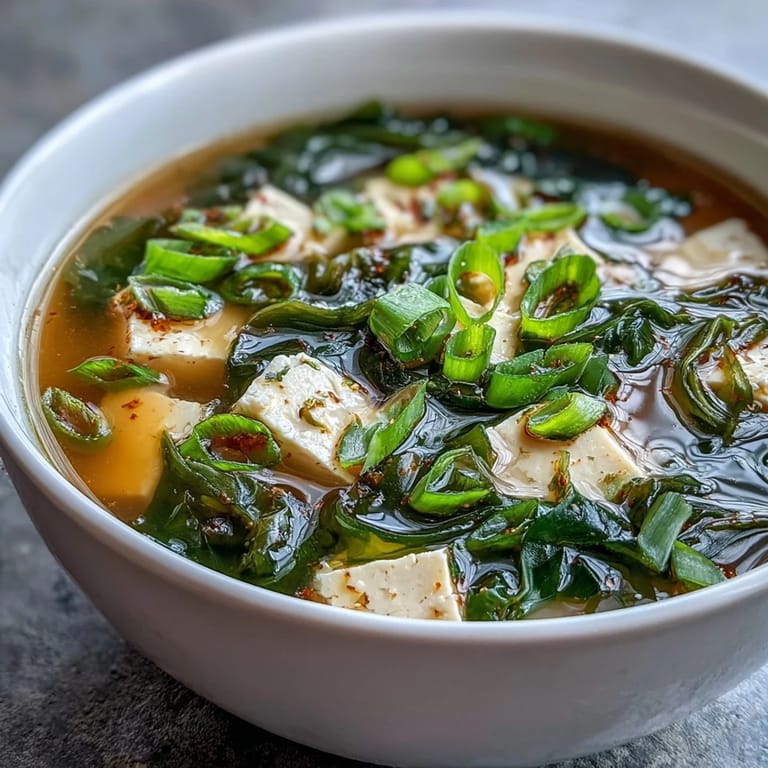
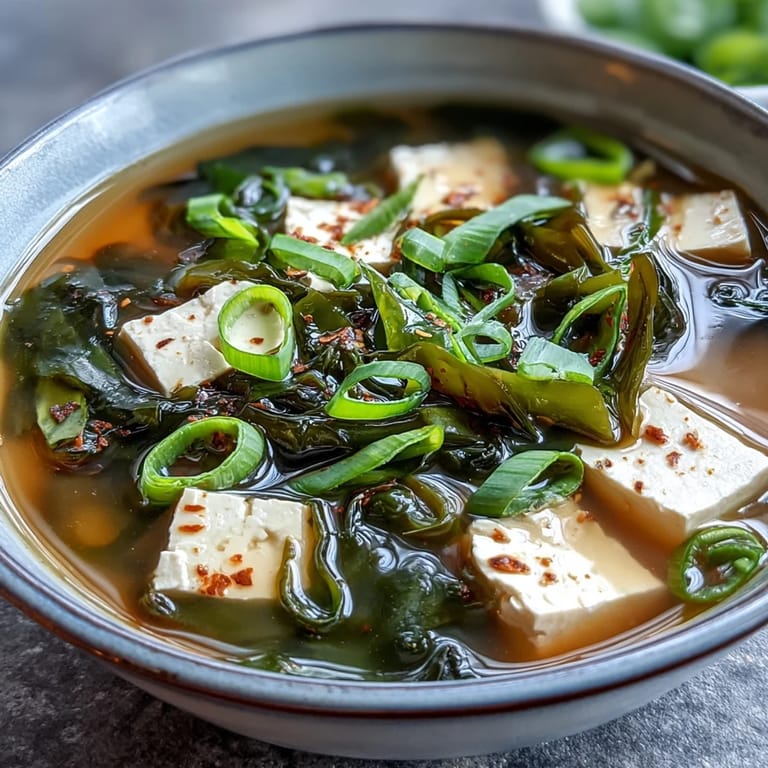
- Silken tofu (200g, cut into 1/2-inch cubes): Its delicate texture is non-negotiable—firm tofu will feel wrong here, like trying to wear the wrong shoes—so seek out silken specifically and cube it carefully.
- Dried wakame seaweed (2 tablespoons): A five-minute soak in cold water transforms these papery sheets into tender ribbons that add mineral notes and chewiness without any fishiness.
- Scallions (2, finely sliced): These arrive at the very end as a bright green whisper of freshness and a gentle sharpness that cuts through the richness.
Tired of Takeout? 🥡
Get 10 meals you can make faster than delivery arrives. Seriously.
One email. No spam. Unsubscribe anytime.
Instructions
- Bring your broth to life:
- Pour the dashi into a medium saucepan and set the heat to medium, watching until small bubbles begin their quiet dance along the bottom—you want a gentle simmer, not a rolling boil that would bruise the delicate tofu.
- Wake the seaweed:
- While the stock warms, place the dried wakame in a small bowl of cold water and let it sit for five minutes, then drain it well to remove any grit or bitterness.
- Dissolve the miso:
- Scoop the miso paste into a small bowl, then ladle some of that hot dashi over it and whisk slowly until it's completely smooth and creamy with no lumps hiding in the corners.
- Build the soup:
- Gently pour the tofu cubes and drained wakame into the simmering dashi and let them warm for two to three minutes, moving carefully so the tofu stays intact.
- Finish with intention:
- Remove the saucepan from heat, then slowly stir in your dissolved miso—this moment matters because boiling it afterward destroys the probiotics and flattens the flavor.
- Serve with care:
- Ladle the soup into bowls and scatter the sliced scallions across the top, then serve immediately while the warmth is still there.
 Pin It
  Pin It
 There's a reason this soup appears on Japanese tables in sickness and in health, at the start of mornings and the end of long days—it meets you exactly where you are. I've learned that sometimes the most nourishing meals are the ones that ask the least of you while giving the most in return.
The Story Behind Miso Paste
Miso isn't just a flavoring; it's fermented time, a gift from cultures that understood that patience transforms simple soybeans into something with layers and history. The first time I read that traditional miso took months to make, I started treating it differently in my kitchen, less like a convenience and more like the carefully crafted ingredient it truly is. White and yellow varieties tend toward sweetness, while red miso carries deeper, more assertive notes—mixing them opens up conversations you didn't know were possible in a single bowl.
Why Dashi Matters More Than You'd Think
A mediocre dashi will drag the whole soup down, while a thoughtful one becomes the best version of itself—this is why making your own from kombu and shiitake, even when you're in a hurry, pays dividends. Store-bought versions vary wildly in quality and salt levels, so if you go that route, taste as you go and don't add extra salt automatically. Some cooks swear by adding a small piece of wakame or a dash of mirin to their dashi base, creating depth that makes the final soup taste less like a recipe and more like a tradition.
Room to Breathe and Improvise
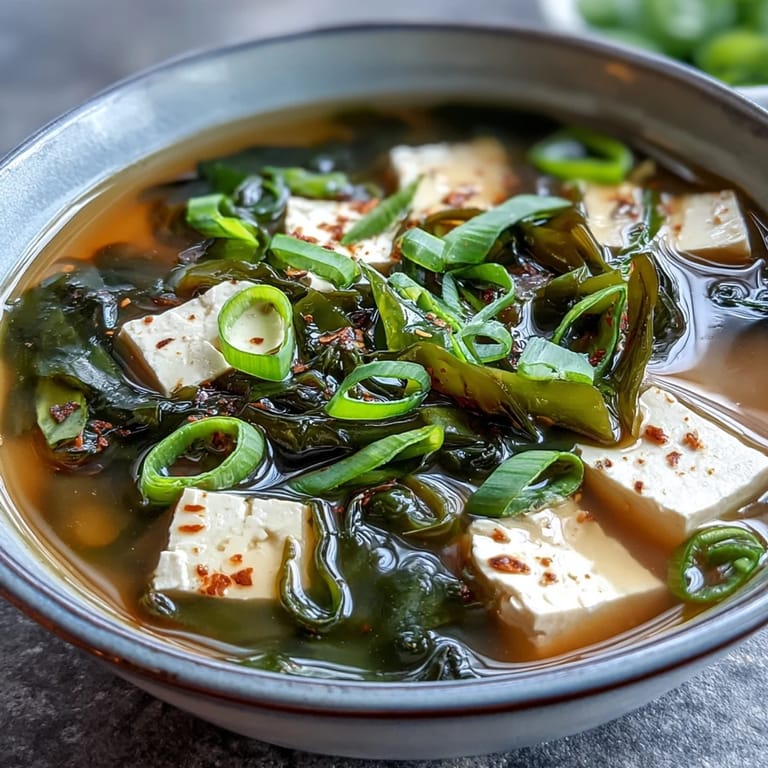
This recipe is a foundation, not a cage, and some of the best bowls I've made came from adding what I had on hand or what the season offered. A handful of fresh spinach wilts in perfectly, thin mushroom slices add umami complexity, and a whisper of ginger can wake everything up without announcing itself. Remember these small additions:
- Fresh spinach or thinly sliced mushrooms add textural interest without changing the soul of the dish.
- A single thin slice of ginger or a small pinch of white pepper can transform this from comforting into something slightly more sophisticated.
- Keep it light and let the miso speak—too many additions will muddy the clarity that makes this soup beautiful.
 Pin It
  Pin It
 This soup has taught me that the most meaningful meals are often the simplest ones, made with attention and served with intention. When you taste yours, I hope it feels like someone who cares is right there in the kitchen with you.
Recipe FAQs
- → What type of miso works best?
White or yellow miso paste offers a milder, sweeter flavor ideal for everyday bowls. Red miso provides deeper, more intense fermentation notes. Many cooks blend both for balanced complexity.
- → Why not boil miso?
High heat destroys the beneficial probiotic cultures in fermented miso and can cause the paste to separate, creating an uneven texture. Always stir it in after removing the broth from heat.
- → Can I make this vegetarian?
Yes. Use kombu and shiitake-based dashi instead of traditional bonito stock. Most Japanese markets carry plant-based dashi powder or granules specifically labeled for vegetarian use.
- → How long does miso soup keep?
Best enjoyed immediately, though leftovers can be refrigerated for up to 2 days. Reheat gently without boiling to preserve miso's beneficial properties. Tofu may soften further during storage.
- → What vegetables can I add?
Thinly sliced shiitake mushrooms, baby spinach, or chopped bok choy complement the traditional flavors. Add heartier vegetables like carrots or daikon during simmering to ensure they become tender.