 Pin It
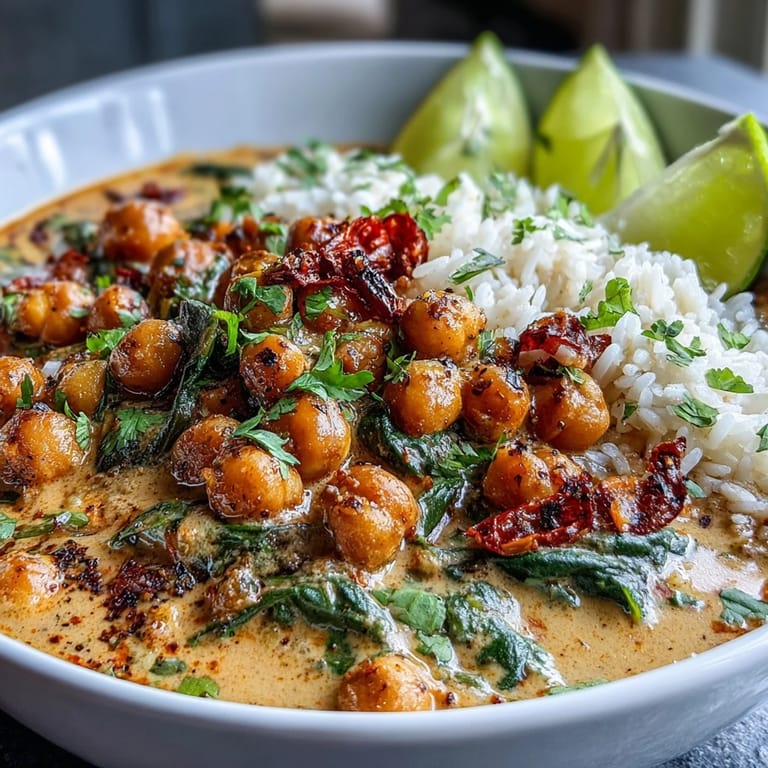
 I discovered this chickpea curry on a gray Tuesday afternoon when my pantry felt impossibly empty—just cans of chickpeas, coconut milk, and a handful of spices that had been waiting for their moment. My roommate wandered in asking what smelled so good, and by the time the curry hit a gentle simmer, the whole kitchen was wrapped in this warm, golden aroma that somehow made the day feel less ordinary. What struck me most was how something so simple to throw together could taste like it had been simmering for hours, like actual care had gone into every layer of flavor.
The first time I made this for friends, one of them asked if I'd been secretly taking cooking classes because the flavor was so balanced and deep. I laughed and admitted it was basically organized chaos—spices toasted, aromatics softened, then everything simmered together—but there was something about watching the kitchen fill with that golden-amber steam that made me feel like I'd unlocked a small kitchen secret. That meal became the one they ask me to bring to potlucks now, which still surprises me.
Ingredients
- Vegetable oil: Use something neutral that can take the heat without burning your spices—I learned the hard way that cheap oils smoke faster and steal the delicate flavor notes.
- Onion, garlic, and ginger: This trio is your flavor foundation, and taking time to dice the onion finely means it melts into the sauce rather than leaving chunks.
- Ground cumin and coriander: These two are the heartbeat of the curry, so if your spices have been sitting for over a year, grab fresh ones—stale spices turn a beautiful dish into something flat and forgettable.
- Turmeric, garam masala, chili powder, and paprika: Each one adds a different dimension, and toasting them for just a minute releases their essential oils and transforms them from powder into something alive.
- Chickpeas: Canned chickpeas save time without sacrificing texture, but rinse them well to remove that starchy liquid that can make the curry taste metallic.
- Coconut milk and diced tomatoes: Full-fat coconut milk creates that silky, restaurant-quality texture, while tomatoes add brightness and acidity to balance the richness.
- Vegetable broth or water: This keeps the sauce at the right consistency, allowing flavors to meld without everything becoming too thick and stodgy.
- Baby spinach: Optional but worth adding for color, nutrition, and a subtle earthiness that rounds out all those warm spices.
- Lime juice: This final squeeze wakes everything up—it's the difference between a good curry and one that tastes like it actually knows what it's doing.
Tired of Takeout? 🥡
Get 10 meals you can make faster than delivery arrives. Seriously.
One email. No spam. Unsubscribe anytime.
Instructions
- Warm your oil and soften the onions:
- Heat the oil over medium heat until it shimmers slightly, then add your finely diced onion and let it slowly turn golden and soft for about 4 to 5 minutes—you'll know it's ready when it becomes almost translucent and starts releasing its sweetness into the pan. This patient step is worth it because it builds the flavor foundation that everything else sits on.
- Bloom the aromatics:
- Once your onion is ready, add the minced garlic and grated ginger and stir constantly for about a minute until the kitchen fills with that sharp, peppery aroma. This is the moment where raw garlic transforms into something mellow and integrated, so don't skip ahead or your curry will taste harsh.
- Toast your spices:
- Add all your spices at once and keep stirring for exactly one minute—this releases the essential oils that make the difference between a flat-tasting curry and one that tastes layered and complex. You'll actually see the spices darken slightly and smell them intensify, which is your sign that they're awake and ready.
- Build the sauce:
- Add your drained chickpeas, canned tomatoes with their juices, coconut milk, and broth all at once, stirring to combine everything evenly so no spice pockets get concentrated in one spot. The mixture should look creamy and loose at this point, not thick or paste-like.
- Let it simmer gently:
- Cover the pan and bring everything to a gentle simmer over medium heat, then let it bubble softly for about 15 minutes while you stir occasionally—this allows all the flavors to marry and the chickpeas to soak up the spiced coconut milk. Resist the urge to crank up the heat; slow and gentle is how you get a curry that tastes balanced rather than one where certain spices overpower the others.
- Add the spinach and finish:
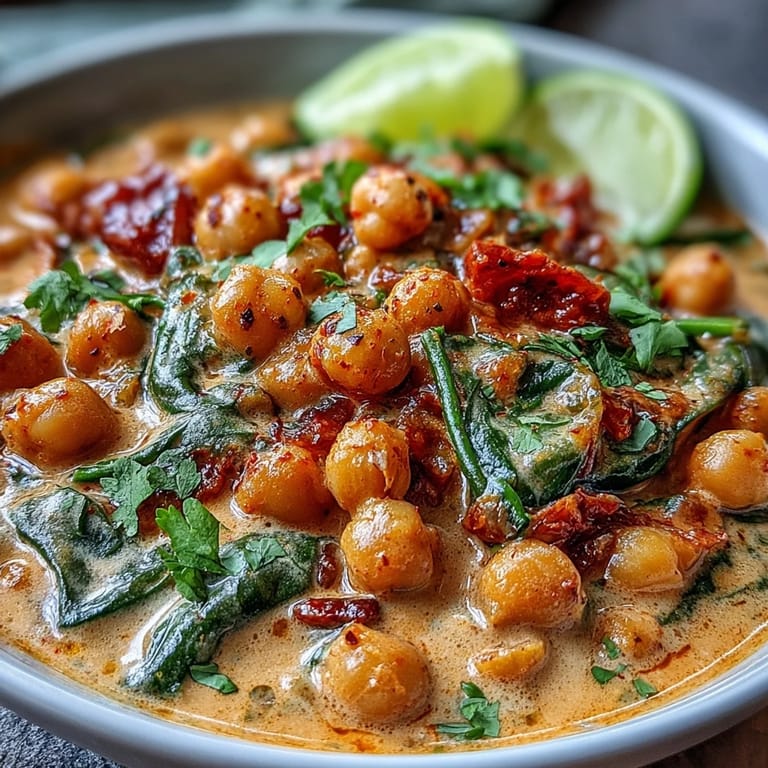
- If you're using spinach, uncover the pan and scatter it across the top, stirring gently for 2 to 3 minutes until it wilts into the sauce and turns it a beautiful jade green. The spinach adds almost nothing to the cooking time but makes the curry look and taste noticeably more sophisticated.
- Taste and adjust with lime:
- Stir in the lime juice and take a taste, then adjust seasoning as needed—maybe a pinch more salt, a squeeze of extra lime if it feels too rich, or a dash more chili powder if you want more heat. This tasting step is where the curry becomes truly yours rather than just following instructions.
 Pin It
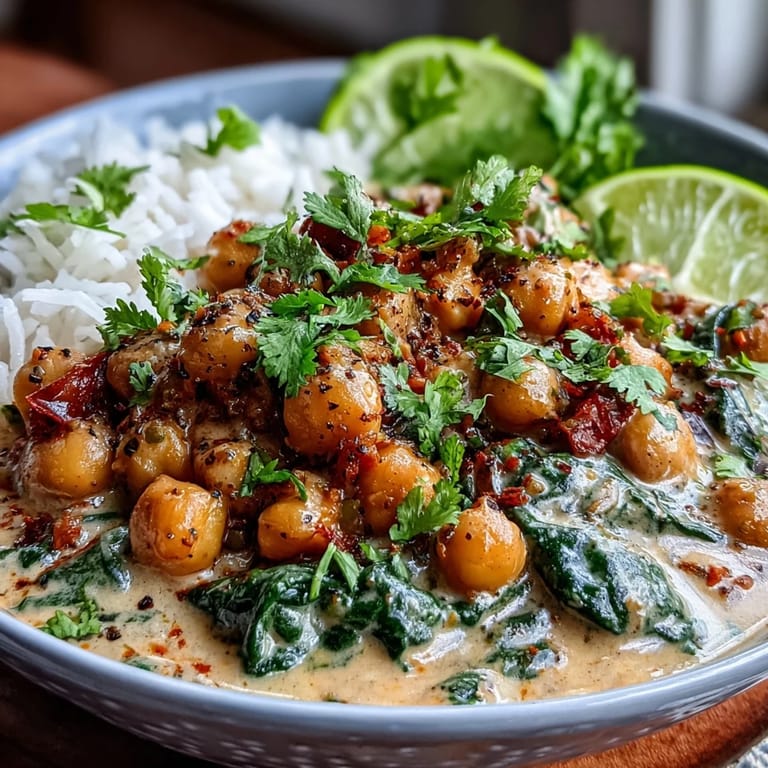
 There's a moment toward the end of cooking this curry when you uncover the pan and the steam rises up carrying all that warm cardamom-like smell, and suddenly your kitchen doesn't feel like just a kitchen anymore—it feels like a place where something real is happening. My partner once said the house smelled like a hug, which is maybe the most accurate description of what this curry accomplishes.
Building Layers of Flavor
What makes this curry work so well is the order in which things happen—toasting the spices before adding liquid releases their essential oils instead of just steeping them like tea, and that difference is everything. I learned this after making a batch where I skipped the toasting step, thinking I was saving time, and ended up with something that tasted more muted and less alive. Now I understand that those 60 seconds of constant stirring are what separate a good curry from one that tastes like it has actual depth and intention.
Texture and Consistency
The beauty of this curry is that you can control how thick or saucy it becomes depending on your mood and what you're serving it with—if you like yours more like a thick stew, just let it simmer uncovered for those last few minutes and watch as some of the liquid evaporates and the sauce clings to each chickpea. On nights when I'm feeling lazy, I keep it looser so I can spoon more sauce over rice, which is honestly the whole point of making curry in the first place.
Serving and Storage
This curry tastes even better the next day when all the flavors have had time to deepen and dance together, so making it ahead for lunch the following day is a genuinely smart move. It keeps in the refrigerator for about four days and reheats beautifully on the stovetop with a splash of extra broth to loosen it back up if needed.
- Pair it with basmati rice, brown rice, or any flatbread you have on hand—the sauce is too good to waste.
- A dollop of yogurt on top adds tang and creaminess if you're not keeping it vegan, though the coconut milk already does most of that work.
- The lime wedges and fresh cilantro aren't just decoration; they're the final bright notes that make people ask for the recipe.
 Pin It
 This chickpea curry has become my default answer when someone asks what I'm making for dinner, because it's one of those rare dishes that feels both effortless and like you actually tried. Every time someone comes back for seconds, I know I've found something worth keeping.
Recipe FAQs
- → How spicy is this chickpea curry?
The mild heat comes from chili powder and can be adjusted to your preference. Start with half the suggested amount for a gentler warmth, or add more if you enjoy bold spice levels.
- → Can I make this curry thicker?
Simply simmer uncovered for the final 5 minutes of cooking time. The coconut milk reduces naturally, creating a richer, more concentrated sauce that clings beautifully to the chickpeas.
- → What vegetables work well in this dish?
Diced sweet potatoes, bell peppers, or cauliflower florets add wonderful texture and nutrition. Add hearty vegetables during the simmering stage so they become tender without overcooking.
- → How long do leftovers keep?
Store cooled portions in an airtight container for up to 4 days. The flavors deepen beautifully over time, making this an excellent option for meal prep or busy weeknight dinners.
- → What should I serve with this curry?
Steamed basmati or brown rice soaks up the creamy sauce perfectly. Warm naan, roti, or gluten-free flatbread also make excellent accompaniments for scooping up every bite.
- → Can I use dried chickpeas instead?
Yes, soak and cook dried chickpeas until tender before adding them to the simmering sauce. One can equals about 1.5 cups of cooked chickpeas, so adjust accordingly.