 Pin It
 Chess pie arrived in my kitchen on a humid July afternoon when my grandmother handed me a worn index card with her spidery handwriting across it. She didn't explain much, just said "this is what we make," and watching that golden custard rise and wobble in the oven felt like inheriting something precious. The name itself puzzled me for years—nobody could quite say where it came from, and maybe that mystery made it better. What I knew for certain was that this simple, no-fuss pie tasted like every summer gathering, every porch conversation, every moment when food became the excuse to sit together.
I made this pie for the first time alone in my kitchen, no audience, just me and the whisk and the smell of melting butter. Halfway through, I realized I'd forgotten the vanilla and panicked—then decided to add it anyway, figuring a pie that forgiving wouldn't care. It didn't. That's when I understood why this recipe had survived generations: it welcomes imperfection, rewards confidence, and always turns out golden.
Ingredients
- 1 unbaked 9-inch pie crust: Whether homemade or store-bought, this is your canvas—make sure it's settled in the dish and ready to catch all that luscious filling without leaking.
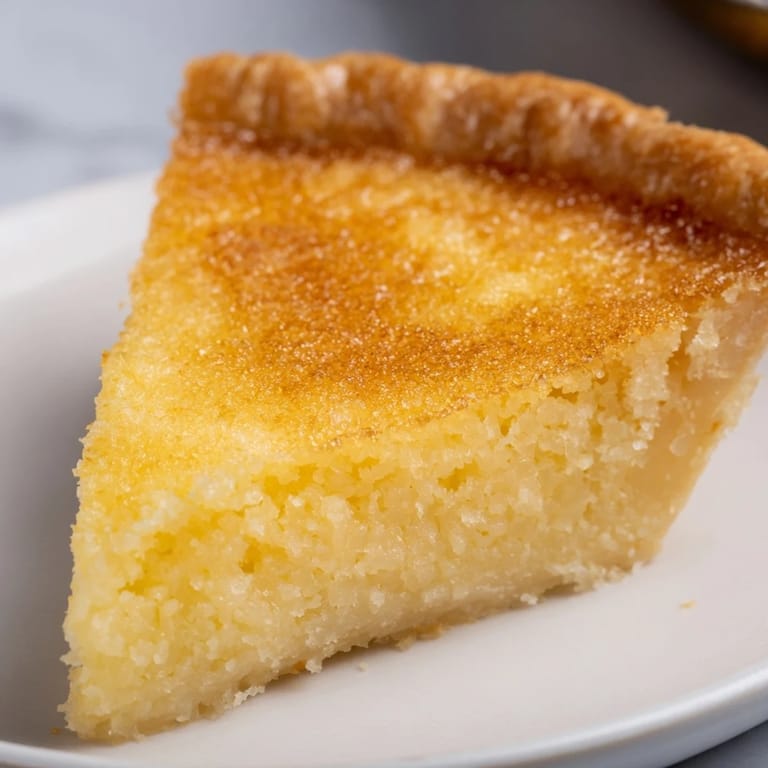
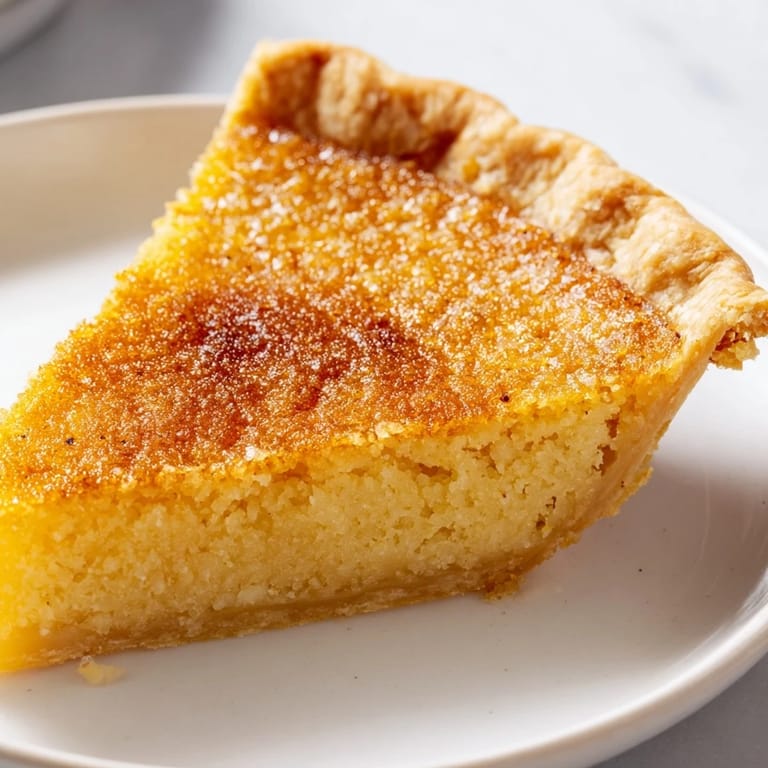
- 1 1/2 cups granulated sugar: This is what creates that magical custard texture and the glossy, crackled top that makes people lean in close to look at it.
- 1/2 cup unsalted butter, melted and cooled: Let it cool slightly so it doesn't scramble the eggs when you whisk them together—this step matters more than you'd think.
- 4 large eggs: They're the backbone of this pie, turning a simple sugar mixture into something silky and substantial.
- 1 tablespoon cornmeal: A small addition that adds a subtle texture and slight corn-forward richness without announcing itself.
- 1 tablespoon all-purpose flour: Just enough to help the filling set properly without making it heavy or dense.
- 1/4 teaspoon salt: Don't skip this tiny amount—it awakens all the other flavors and prevents the sweetness from feeling one-dimensional.
- 1/4 cup whole milk: This keeps the filling smooth and slightly pourable before it bakes and transforms into custard.
- 1 teaspoon vanilla extract: Use the real stuff if you can—it adds warmth and depth that extract-free versions simply miss.
- 1 tablespoon white vinegar (optional): If you use it, it's like a whisper of brightness that cuts through the richness without being noticeable as vinegar.
Tired of Takeout? 🥡
Get 10 meals you can make faster than delivery arrives. Seriously.
One email. No spam. Unsubscribe anytime.
Instructions
- Heat your oven and prepare the crust:
- Preheat to 350°F and settle that pie crust into your dish, crimping the edges however feels natural to your hands. You want it snug and ready, a stable home for what's coming next.
- Build the filling base:
- Whisk the sugar, cooled melted butter, eggs, cornmeal, flour, and salt together until the mixture is smooth and the sugar begins to dissolve slightly. Take your time here—this is where the magic starts.
- Finish and pour:
- Add the milk, vanilla, and vinegar if you're using it, whisking until everything is silky and unified. Pour this into your waiting crust and let it settle into every corner.
- Watch it bake:
- At 45 to 50 minutes, the pie will puff up like it's about to overflow, then the top will turn a deep golden brown and the edges will look set while the very center jiggles just slightly when you tap the dish. That wobble is exactly right—it means custard, not cake.
- Cool with patience:
- Remove it from the oven and let it cool completely on a wire rack, even though every instinct will tell you to slice into it immediately. This cooling time is when the filling sets into that perfect texture.
 Pin It
 My mother served this pie at my college graduation, surrounded by store-bought desserts that looked fancier and cost more, and somehow everyone went back for seconds of the simplest one on the table. That's when I realized chess pie isn't about impressing anyone—it's about the quiet confidence of something that knows exactly what it is.
Why This Pie Lasts
Chess pie has traveled across centuries and regions, and it endures because it asks almost nothing of the baker while delivering something that feels sophisticated and intentional. The ingredients read like a pantry staple list from any era, yet together they create a dessert that tastes both humble and refined. There's no temperamental meringue, no finicky lamination, no ingredients you've never heard of—just butter, eggs, sugar, and time in the oven doing the work for you.
Variations Worth Exploring
The beauty of this recipe is that it accepts gentle modifications without losing its soul. A pinch of nutmeg whispers spice into the filling, lemon zest adds brightness, and I've heard whispers of bourbon or a touch of almond extract in some family versions. The core stays steady while you tinker at the edges, making it a foundation rather than a rigid formula.
Serving and Storage Wisdom
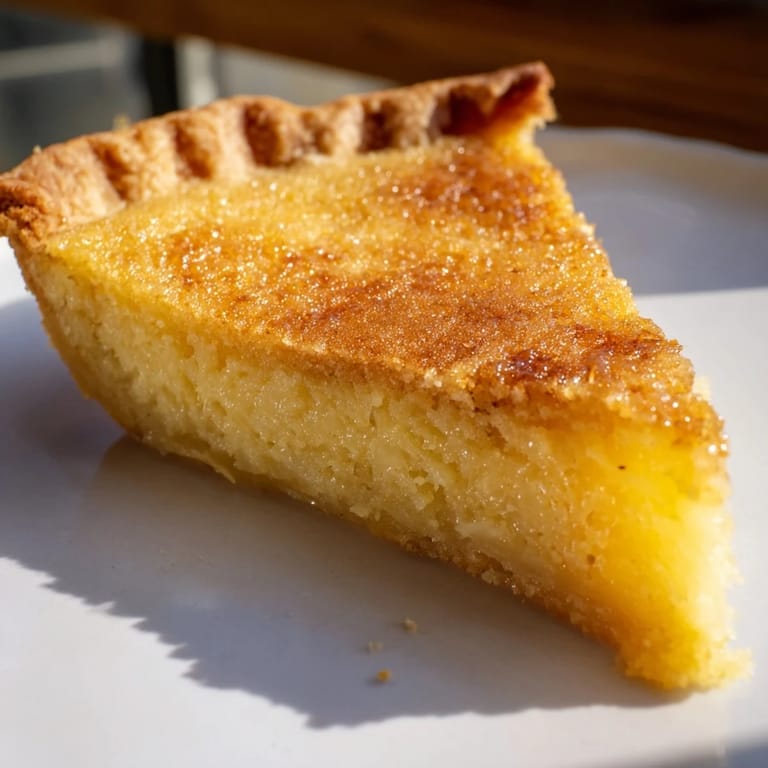
Slice this pie warm or at room temperature—it's equally at home either way, though something about a slightly warm slice with whipped cream nearby feels like the original intention. The crackled sugar top stays crispy for hours, which is a small miracle of physics you'll appreciate when you're eating the last slice two days later.
- Serve with a dollop of fresh whipped cream or a handful of berries to add brightness against the rich sweetness.
- Store leftovers covered at room temperature for up to two days, though they rarely last that long.
- If somehow you have extra, this pie actually freezes well for up to a month if you wrap it carefully.
 Pin It
 This pie is a reminder that the best recipes aren't complicated—they're just honest, made from things you likely already have, and capable of bringing people back to your table again and again. Make it this week.
Recipe FAQs
- → What makes the custard filling smooth and rich?
The filling blends sugar, melted butter, eggs, cornmeal, and milk into a silky mixture that sets to a creamy texture when baked.
- → Can I add flavors to the filling?
Yes, adding a pinch of nutmeg or lemon zest enhances the filling's flavor, while vanilla extract provides a subtle aromatic note.
- → How do I know when the pie is fully baked?
The pie is done when the center is just set and the top has turned a golden brown with a slight puff that settles as it cools.
- → Is the vinegar necessary in the filling?
Vinegar is optional; it adds a subtle brightness but can be omitted without affecting the overall texture.
- → What is the best way to serve this custard pie?
Serve the custard cooled at room temperature or chilled, optionally paired with fresh berries or a dollop of whipped cream.