 Pin It
 My neighbor knocked on my door one Saturday morning with a steaming skillet and the most wonderful smell wafting from her kitchen. She'd just returned from visiting family in Tunisia and wanted to share what she'd learned: shakshuka, she explained, was less about perfection and more about that magical moment when runny egg yolks break into a spiced tomato sauce. I watched her make it that morning, and by the time those eggs were gently poaching in the aromatic sauce, I understood why she'd been so excited to teach me.
I made this for my roommate during a particularly rough week when she needed something warm and honest. We sat at the kitchen counter, tearing chunks of bread and dragging them through the silky sauce, barely speaking because the food said everything. It became our quiet ritual that semester whenever either of us needed grounding.
Ingredients
- Olive oil: Two tablespoons of good olive oil creates the foundation for everything else, so don't shy away from something you actually enjoy tasting.
- Large onion: Diced into pieces that soften completely, it becomes the sweet base that balances the spices and acidity.
- Red bell pepper: This adds natural sweetness and color; the peppers should be soft enough to almost melt into the sauce.
- Garlic: Three cloves minced fine will perfume the whole pan without becoming bitter.
- Crushed tomatoes: A 28 oz can gives you convenience, but fresh tomatoes in season will make this taste like a completely different dish in the best way.
- Chili pepper: Optional, but a small one finely chopped adds gentle heat and complexity without overwhelming the other flavors.
- Ground cumin: One teaspoon brings earthiness and warmth that makes people ask what's in this.
- Sweet paprika: A teaspoon of this gives color and a subtle sweetness that rounds out the spices beautifully.
- Ground coriander: Half a teaspoon adds a brightness that prevents the dish from tasting heavy.
- Cayenne pepper: Just a quarter teaspoon if you want it, a whisper of heat for those who enjoy a slight tingle.
- Salt and black pepper: Taste as you go; this sauce will concentrate as it simmers, so you'll want to adjust seasoning near the end.
- Large eggs: Four eggs nestled into the sauce, and try to use ones at room temperature so they cook more evenly.
- Fresh parsley or cilantro: Chopped fresh at the very end, this brings brightness and a living quality to the finished dish.
- Feta cheese: Crumbled over top if you use it, the salty tanginess cuts through the richness of the yolks.
Tired of Takeout? 🥡
Get 10 meals you can make faster than delivery arrives. Seriously.
One email. No spam. Unsubscribe anytime.
Instructions
- Warm the oil and start with the aromatics:
- Heat your olive oil in a large skillet over medium heat until it shimmers slightly. You'll know it's ready when you add your diced onion and it starts sizzling gently, the sound itself a small promise that something good is happening.
- Soften the vegetables:
- Add the diced onion and red bell pepper together, stirring occasionally for 5 to 7 minutes until they're tender and the onion becomes translucent. The peppers should lose their raw edge and become almost silky in texture.
- Build the flavor foundation:
- Stir in your minced garlic and finely chopped chili pepper, letting them cook for just about a minute until fragrant. This moment is crucial because garlic can turn bitter quickly, so keep the heat moderate and your attention focused.
- Add the spiced tomato sauce:
- Pour in your crushed tomatoes along with the cumin, paprika, coriander, cayenne, salt, and pepper, stirring everything together until well combined. The sauce will smell incredible at this point, and that's when you know you're on the right track.
- Let the sauce develop:
- Simmer uncovered for 10 to 12 minutes, stirring occasionally, until the sauce thickens and deepens in color. You want it to reduce enough that it coats a spoon but remains saucy enough to cradle the eggs.
- Create wells for the eggs:
- Using the back of a spoon, make four gentle indentations or wells in the sauce, spacing them so each egg has its own little nest. Think of it as creating a cozy spot for each egg to settle into.
- Nestle in the eggs:
- Crack one egg into each well, being careful not to break the yolks. The whites will start cooking immediately in the heat of the sauce, which is exactly what you want.
- Finish cooking covered:
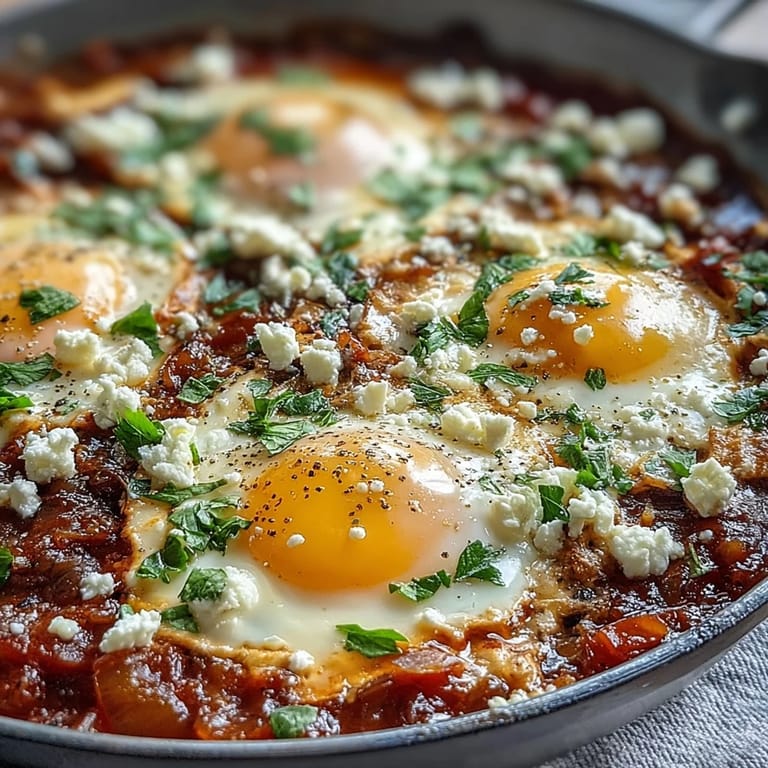
- Cover the pan and reduce the heat to medium-low, cooking for 6 to 8 minutes until the egg whites are set but the yolks still jiggle slightly when you gently shake the pan. If you prefer firmer yolks, simply cook a bit longer.
- Garnish and serve:
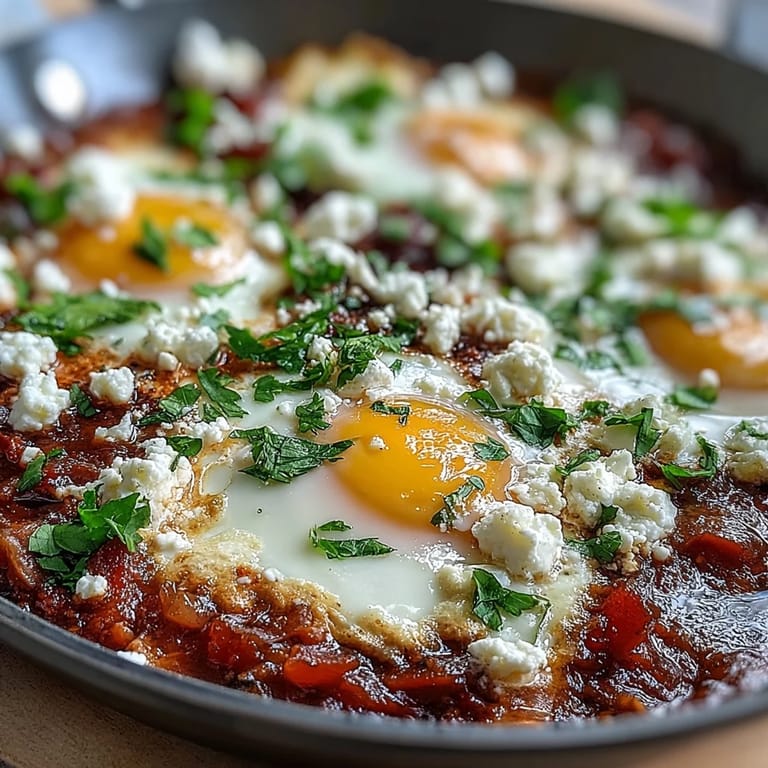
- Remove from heat and scatter fresh chopped parsley or cilantro over the top, then add crumbled feta if you'd like. Serve immediately while everything is still steaming, ideally with warm bread for scooping.
 Pin It
 There's something about sharing a skillet of shakshuka that transforms a meal into an experience. Everyone hovers around it, tearing bread, arguing good-naturedly about whose egg looks the most perfect, and somehow the conversation flows easier with warm spices and soft yolks involved.
The Magic of Runny Yolks
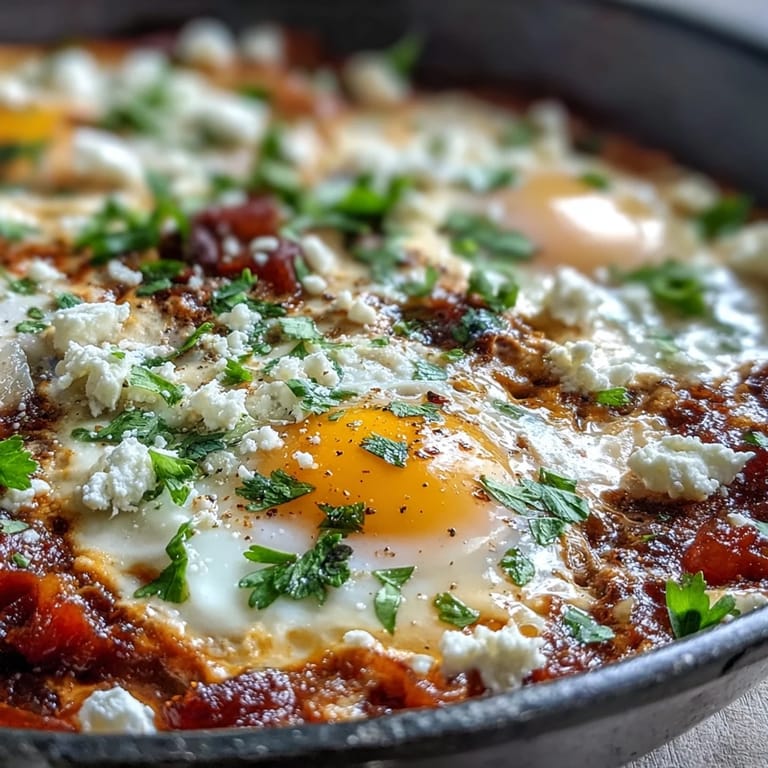
The whole point of shakshuka hinges on that moment when your fork breaks the yolk and it flows into the sauce like liquid gold. It's not pretentious or difficult to achieve; it simply requires you to trust the timing and not overthink it. Once you've made it once and felt that satisfaction, you'll understand why people make this again and again.
Bread Is Not Optional
I learned this the hard way when I tried to eat shakshuka with a fork and spoon alone, desperately trying not to waste the sauce. Warm pita, crusty bread, or even thick slices of sourdough become an essential utensil for scooping up every bit of that spiced tomato sauce mixed with runny egg yolk. The bread isn't just an accompaniment; it's part of the dish itself, the way you experience and finish each bite.
Ways to Make It Your Own
Once you've made the basic version and it feels comfortable in your hands, the variations practically suggest themselves. You might add roasted red peppers instead of fresh ones for deeper sweetness, or stir in a dollop of harissa for serious heat. Some mornings you'll find yourself adding sautéed spinach or crumbled feta to make it feel more substantial, and those improvisations are when shakshuka truly becomes yours.
- Smoked paprika instead of regular paprika creates a deeper, almost campfire-like flavor that feels especially good on cooler mornings.
- A handful of fresh spinach or kale stirred in just before the eggs adds nutrition and a lovely color without changing the essential character of the dish.
- If you want to make it vegan, crispy chickpeas or pan-fried tofu pressed and seasoned will give you that protein element eggs provided.
 Pin It
 Shakshuka taught me that breakfast doesn't have to be rushed or boring, and that the simplest ingredients treated with attention and care can become something that people remember. Make it for someone you care about, and watch how a shared skillet and warm bread somehow make everything feel a little lighter.
Recipe FAQs
- → What is shakshuka?
Shakshuka is a North African and Middle Eastern dish of eggs poached in a sauce of tomatoes, olive oil, peppers, onion, and garlic. Common spices include cumin, paprika, and cayenne.
- → How do I know when the eggs are done?
The whites should be fully set and opaque, while the yolks remain slightly jiggly and runny. This typically takes 6-8 minutes covered. Cook longer if you prefer firmer yolks.
- → What should I serve with shakshuka?
Crusty bread, warm pita, or flatbread are perfect for soaking up the flavorful sauce. It also pairs well with olives, cured meats, or a simple green salad.
- → Can I make shakshuka ahead of time?
The tomato sauce base can be prepared 1-2 days in advance and reheated before adding the eggs. For best results, add and poach the eggs just before serving.
- → How can I make shakshuka spicy?
Add diced chili peppers to the sauce, increase the cayenne pepper, or stir in harissa paste for authentic North African heat. Adjust spice levels to your preference.
- → Is shakshuka gluten-free?
The dish itself is naturally gluten-free. Just ensure you serve it with gluten-free bread options or skip the bread entirely to maintain a gluten-free meal.